A Call for Resourced Redesign
Earth Day, 2026

Earth Day began in response to a 1969 oil spill and subsequent protests right here in California. It was a rallying cry to address our looming “silent spring” and reorient humanity toward life affirming stewardship. Our first Earth Day was 1970, three years before my birth and in 1990 the observance of Earth Day went global.
So what has happened in the intervening years?
A lot of good, often trotted out anecdotally in an attempt to add energy, optimism and inertia to initiatives that still have steam. This NY Times summary from David Gelles at the Climate Desk does a nice inventory at our moment; clean energy is ascendant and will likely become dominant in the next decade, even with all of our political setbacks. Coal and fossil fuels and all of our petroleum derived synthetics though don’t look to be going away soon. Rainforests can recover if left unexploited in just a few decades. Nature has a remarkable capacity to heal and replenish itself if we are wise enough to give it space, leaving most natural resources in place, unexploited.
But most wildlife has gone away in my lifetime, according to the WWF a 73% decline from 1970 to 2020. Our population has roughly doubled to 8.3 billion humans. New evidence suggests that the earth’s carrying capacity, at current rates of consumption maxes out at about 2.5 billion people. In our demand-gen obsessed economy, we currently have sufficient clothing to take care of the next six generations, but we’re still making more. Carbon in the atmosphere and other greenhouse gas emissions continue to escalate globally. And even if we full on stopped fossil fuel use, it would be decades before carbon PPM would potentially descend. And the United States, measured by our Gini coefficient of wealth inequality (0.83), may land us as the most economically unequal society our world has ever known. History suggests that such disparity has never lead to stability, but rather most often to bloodshed.
None of this is sustainable and all of it suggests that our species is collectively crazy, run by algorithms of consumption that are out of control.
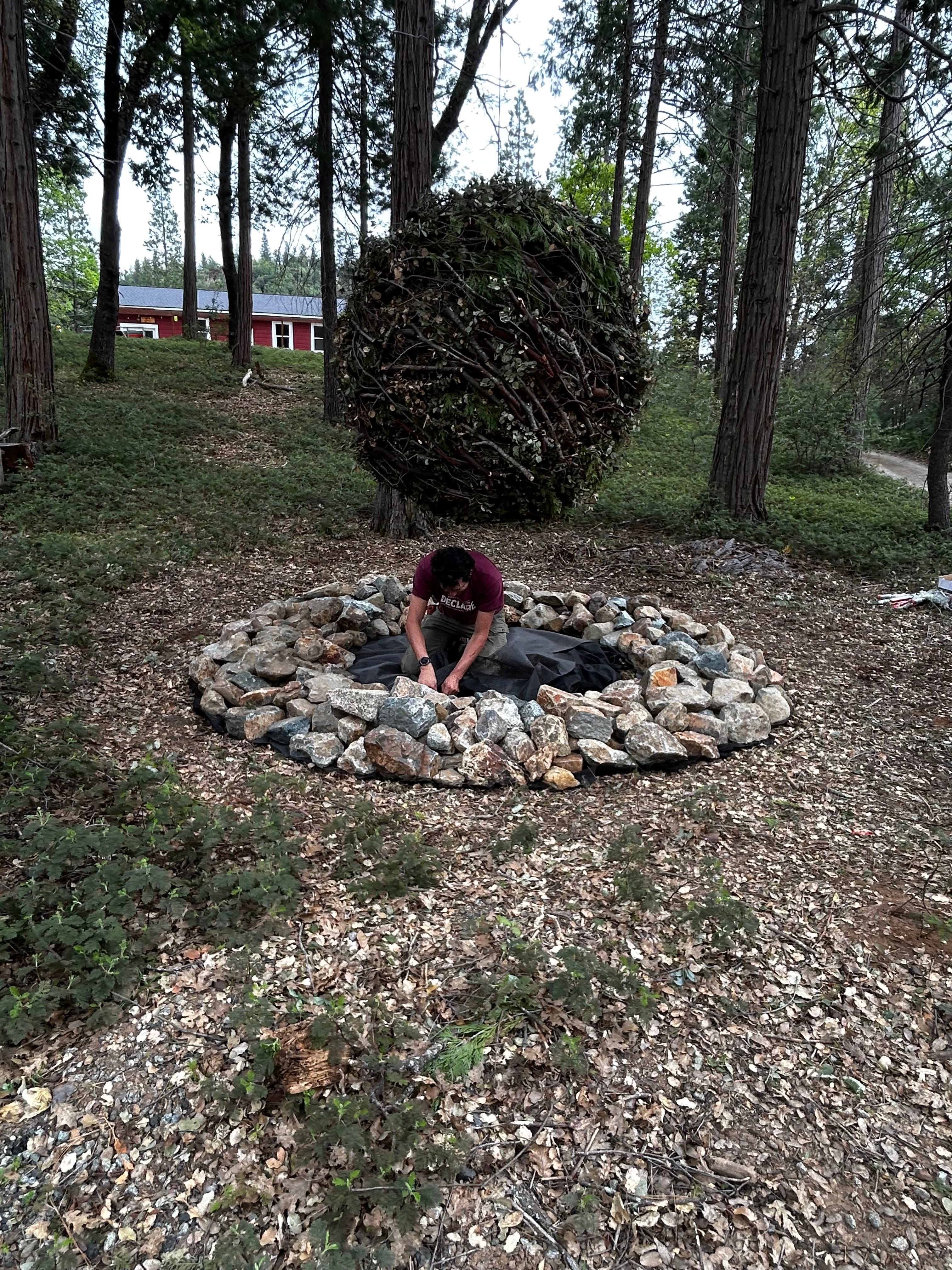
Above: Artist Mark Baugh-Sasaki puts finishing touches on his new suspended sculpture at Camp Earnest.
The macroscopic view is that we continue to accelerate towards cascades of collapse and our most passionate environmental leadership still appears at least to me fragmented in their approaches to addressing our crisis. Those of us focused on a healthy world shouldn’t fool ourselves; our strategies thus far have been inadequate. Reinventing our social, political and economic systems to render them regenerative seems to me the most obvious and urgent purpose on the landscape today and is simultaneously comically underfunded. Everyone’s efforts need to cohere and converge, go mainstream and become defaults by design.
Instead, proven harm reduction interventions get the lion’s share of impact capital, leaving the recursive root causes of those harms robustly in place. We accrue mountains of band-aids and pay for fire extinguishers, but never replace our schools for arsonists or rewrite economic rules to make companies applying their machetes to our ecologies illegal. So long as it is celebrated and rewarded to destroy social and ecological health, we will continue to fight a losing battle, a war of attrition rather than a moonshot of societal redesign.
All of this weighs on me today, even as I can also acknowledge that all of our dreams as a family have come true. We are healthy and live in a “mountain paradise.” We have overcome a lot to make this place so amazing. Though we work hard, our family wants for absolutely nothing. We have a community of some of the most compassionate, wise and deeply principled people on the planet. We love our work as event producers and we find ourselves finally in a position to give more and more to our neighbors, to “build longer tables” and relentlessly share our abundance with friends and neighbors every day. We invite folks over for free fruit and veggie seedlings from our greenhouse, cook for and feed them, host our local PBA, fund and volunteer for our local parent coop nursery and support a new and inspiring candidate for District 3 supervisor in Tuolumne County, Tim McCaffrey.
So much in our short term microcosm is looking up, even after most of the American west just experienced it’s warmest and driest March on record, causing our local ski resort to end the season early, negatively impacting all of our local small businesses, with several restaurants permanently closing. With weak or no snow, winter tourism vanishes and with it local jobs and economic activity. The long term climate looks like it may eliminate completely some of our ski seasons and perhaps some time after I’m gone, all of them.
What can be done?
Climate adaptation is now unavoidable and a TON can be done to build our resiliency for the volatility that now seems inevitable. I am inspired by the bioregional limb of our larger movement. When faced with adversity, we humans are most likely to become a lot more like Star Trek than like Mad Max, with ample studies and stories highlighted in books like Rebecca Solnit’s A Paradise Built in Hell, Sebastian Junger’s Tribe: On Homecoming and Belonging or Jeanne Carstensen’s recent A Greek Tragedy. Now is the time to learn to grow food and feed each other, to build robust structures of mutual aid like our local Sierra Mutual Aid Group and effective local government, to generously subsidize experiments in regionally specific permaculture and food forests. It turns out that when things get really hard, it’s not a stockpiled arsenal that saves you, but deep bonds with friends and community.
Here’s my one ask, one guy’s take on the fulcrum, a point of maximum leverage.
Every time something goes horribly wrong, it contains within it the remedy that is needed. The greater the crisis, the stronger people’s appetite to try genuinely new approaches.
In my opinion, we just shouldn’t have billionaires. We live in oligarchy, or as former president Jimmy Carter bravely and publicly stated when he had zero f*cks left, we live in plutocracy, one dollar, one vote.
But since we do have billionaires, I see in some of them our hope. I’m reminded of an off the record dinner I enjoyed some fifteen years ago with a professor then teaching at Harvard Business School. He summarized in confession his insights from a meta-analysis of studies he conducted, an analysis that looked for correlations between windfalls of wealth and power and pro-social behaviors. When any of us get a big bump up (winning the lottery, buying Apple stock at the beginning), do we become more generous, caring or altruistic or do we fall into solipsism, even psychopathy?
The findings were conclusive. About 90% of people when given a big economic boost, become less pro-social, less compassionate. But about 10% of us become MORE pro-social, more caring. Almost nobody remains unchanged. Think here of very public philanthropists giving unrestricted funding from a place of humility rather than paternalism, people like MacKenzie Scott. 10% of us have a positive moral awakening and embrace the fact that with greater economic might comes far greater responsibility to all of humanity and all of life. This friend wouldn’t share the material with me, because he was certain it would negatively impact his career and didn’t want it out there. Here’s a similar study from Australia (can this even happen in the United States?)
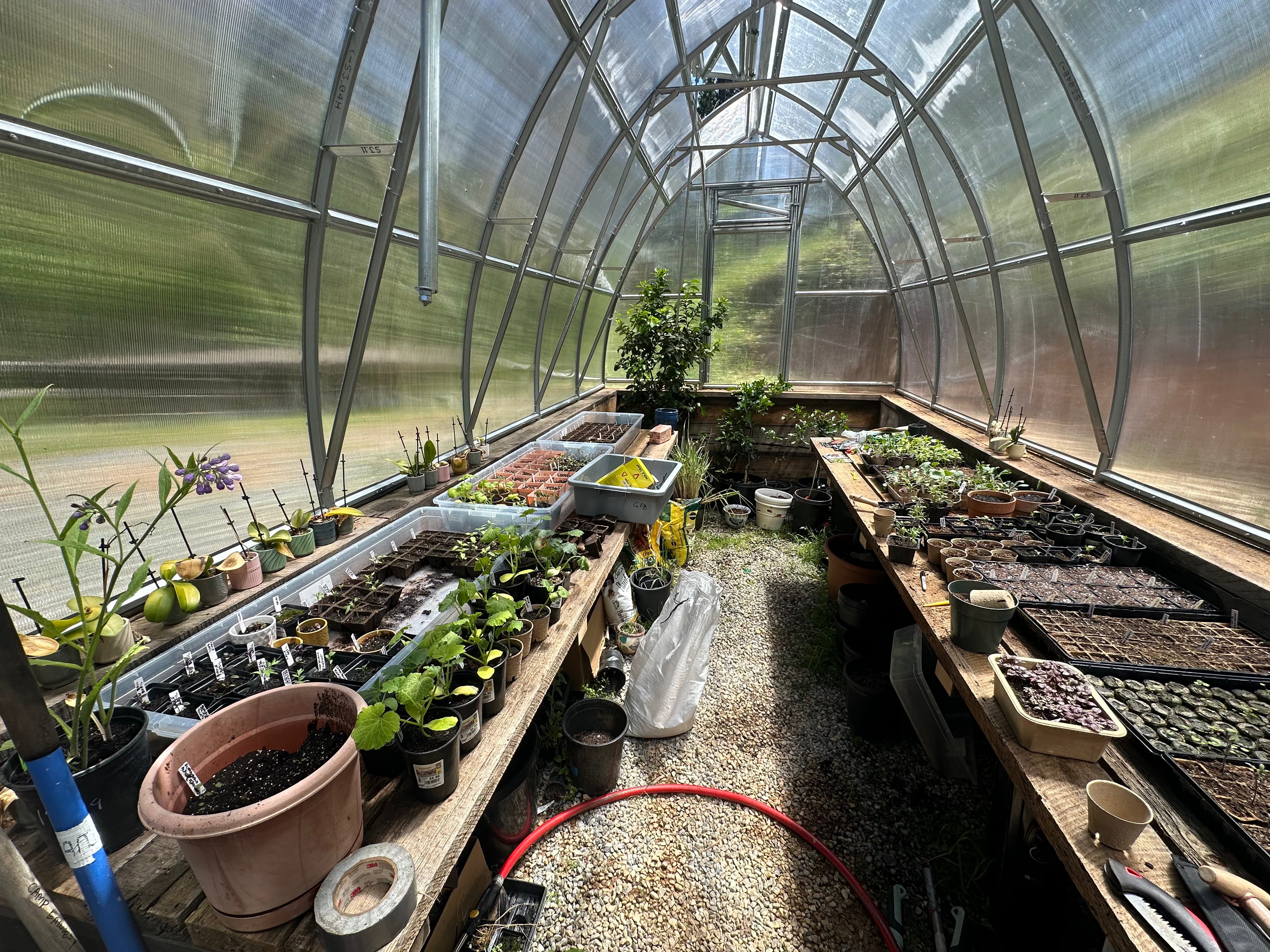
Above: Our sunken greenhouse where we grow year round to fill our gardens and forest with edible species.
My call to action for Earth Day?
Talk to these people. Send them this piece or any of the links below, whatever you think might connect best with them. Implore them to consider that they are uniquely positioned to fund much needed experiments in reinvention.
If nearly 100% of our impact spending currently goes to harm reduction, to rescue missions for ecological hot spots, to stopping human trafficking, providing mosquito nets, or clean water or modern sanitation, let’s hit pause for just a moment to reflect. What if we instead devoted 80% of a credible estimate of $1.6T worldwide in impact capital deployed to these vital interventions? And what if 20% then went to research and development, the attempt to create parallel economics and other systems that don’t incentivize these harms in the first place? Or we just keep that $1.6T where it is, but add another $320B for R&D into how our societies could operate regeneratively?
Such R&D might bring into view answers to questions like, how might ecocide become illegal right now?
How would an economy that drives wealth to the middle operate, rather than using regulation, punitive justice and progressive taxation after the fact to try to curtail bad behaviors?
How do we make doing the right things for people and planet the default, at hand, socially celebrated choices for entrepreneurs, rather than a competitive disadvantage (which I believe is a current fact)?
How might a system operate that rewards everyone in both explicit and implicit ways for restoring fisheries, kelp forests, grasslands, jungles and other ecologies? Right now these only appear in GDP once extraction and exploitation begins. A similar dynamic holds true for human labor and uncompensated economies of care.
What are the MVEs, the minimum viable experiments, that might restore social and ecological health in an equitable way to people and the environment globally?
And how do we move forward with such a “social and ecological DARPA” with due haste, with the urgency that our moment requires, without inadvertently reproducing the harmful incentive architectures we inherited?
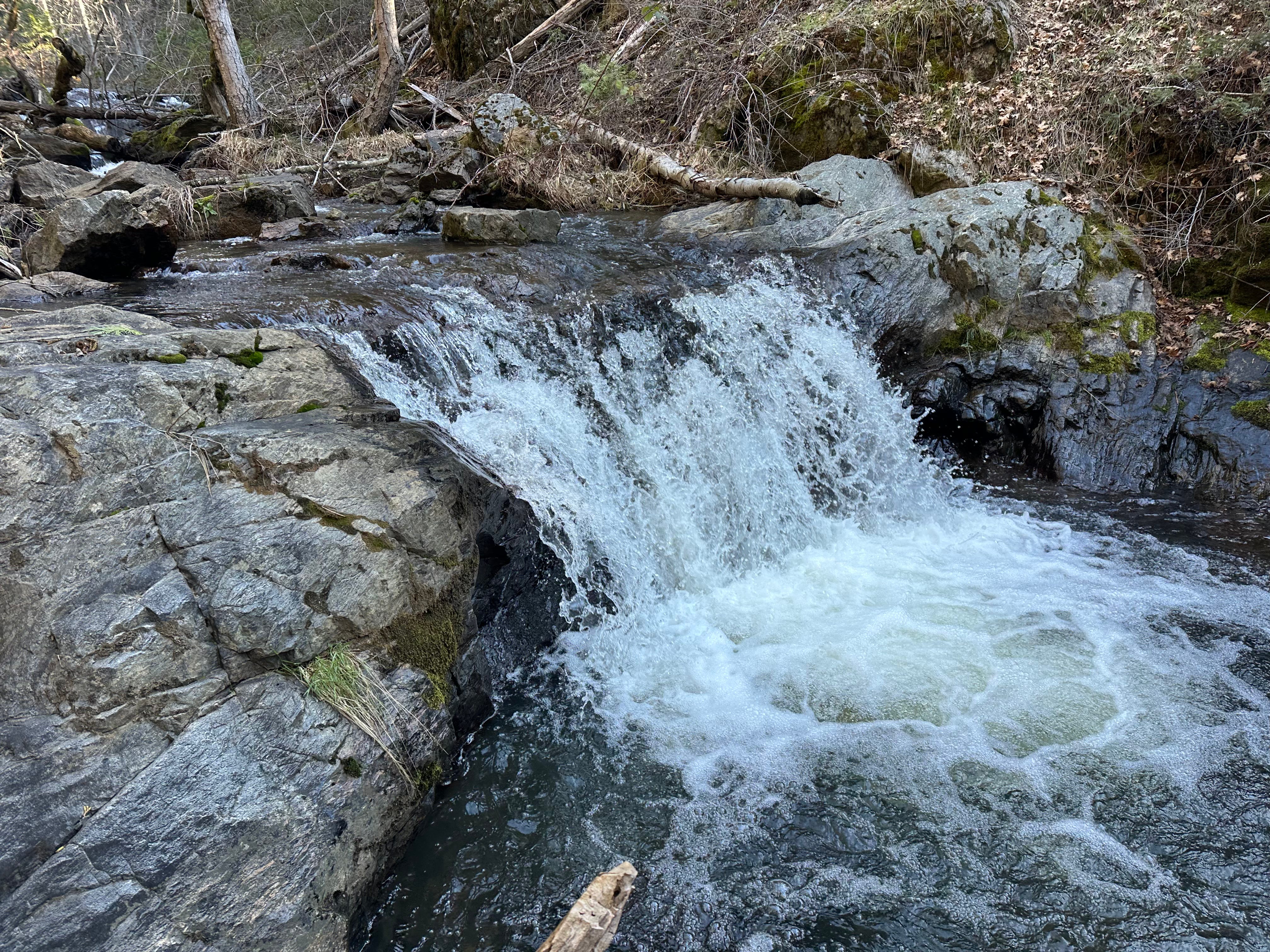
Above: One of our many waterfalls along Turnback Creek.
Thank you for reading. Comments and questions are welcome below. Here are some organizations that with a wise and judicious but significant infusion of capital, might lead the way on reinventing how our societies function. This list is not exhaustive, but the tip of the iceberg. Best of all would be a symbiotic approach, surfacing what many of these and other organizations do best and revealing complementarity to build up a field of capacity greater than the sum of its parts.
The Doughnut Economics Action Lab
Regenerative Technology Project
The Buckminster Fuller Institute
Excellent! I’ve just spent the week at SF Climate Week. When I start talking about some of the calls to action you outline, they seem to be far outside of the Overton Window of many people who have dedicated their careers to climate solutions. They listen, then thank me and continue to mingle about the room.
What you’re outlining is going upstream to the source of our challenges. Creating a different story of being here together on Earth.
Thanks for all you do!
Well said, Raman. Thank you for your work.
I’d like to recommend an addition to your list of links: socialvalueint.org, which works to expand the way society accounts for value to include effects on people’s wellbeing, and enable decisions to increase wellbeing.
It’s been great getting acquainted and I look forward to more collaboration with you in the years to come!